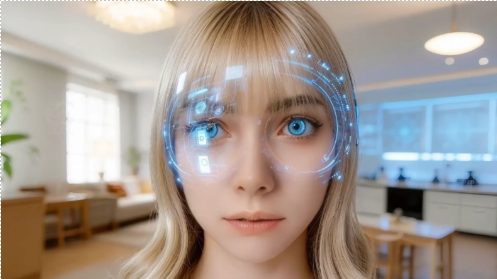
Discover why AI sex dolls move their heads first and what that means for realism. Learn about the tech behind the scenes and how to tell real AI from simple mechanics.
You might picture an AI sex doll as a full-on humanoid robot—walking, turning, hugging, doing everything on its own. But the reality? We're not there yet. The smart features that actually made it to market are mostly in the head. And that's not a random choice. It's a practical one.
Eyes that track or move. Mouths that open and close in sync with speech. Heads and necks that turn toward sound. Some can even change facial expressions mid-conversation. When you combine mechanical movement with AI-generated voice responses, a once-static doll suddenly feels way more interactive.
Instead of asking if a product is a robot, it's smarter to break down the functions: Can it hold a conversation? Which facial parts move? Are speech and movement synchronized? Are those functions only in the head, or do they extend to the body?
### Why Not Make the Whole Body Move First?
SE Doll's development of the X-Bot shows why the head became the starting point. In a 2026 interview, product lead Tomy said the team considered full-body robots back in 2017. But the tech and hardware costs weren't ready, so they focused on the head instead.
The logic is simple. A conversation system can make a doll speak, but people don't judge responsiveness by voice alone. Eye contact, mouth sync, natural smiling, expression changes—almost all those cues live in the head. Putting limited mechanical hardware there creates a much more noticeable interactive effect in a compact area.
RealDoll's Harmony robot follows a similar path: most mechanical movement is in the head—eyes, mouth, eyebrows, neck—while the body still relies on a posable jointed skeleton. That's still far from the fully autonomous humanoid robots in sci-fi.
### A Moving Mouth Doesn't Automatically Mean AI
When shopping for a sex doll head, you'll see different levels of functionality: soft silicone, movable jaw, realistic oral structure, motorized mouth movement, movable eyes, voice features, and AI. They might all appear in the same config table, but they solve very different problems.
SE Doll's ROS, for example, stands for Realistic Oral Structure. It focuses on the physical build of the mouth—teeth, gums, tongue, internal shaping, and an openable lower jaw. ROS makes the mouth more realistic and less static, but it doesn't let the head understand speech.
A movable jaw is mechanical. A motorized mouth following a preset pattern is electronic. An AI robotic head goes further: it receives your speech, generates a response, and coordinates voice, mouth movement, and facial expression. Keeping these concepts separate stops a moving mouth from being mistaken for full AI interaction.
### The Experience Depends on How Well Systems Work Together
SE X-Bot Annika is a good example. According to SE's product info, the head combines AI conversation, voice output, a mechanical facial structure, and a silicone face. After you speak, the system generates a response and coordinates voice with eye, mouth, and facial movements. That coordination is where much of the difficulty lies.
> "The magic isn't in any single feature—it's in how seamlessly they sync up."
Here's what to look for:
- **Conversation ability:** Can it understand and respond to you?
- **Facial movement:** Which parts move? Eyes, mouth, eyebrows?
- **Synchronization:** Does the voice match the lip movements?
- **Body integration:** Are movements limited to the head, or do they extend to the body?
As technology improves, we'll likely see more body movement. But for now, the head remains the focal point—because that's where we look for connection.