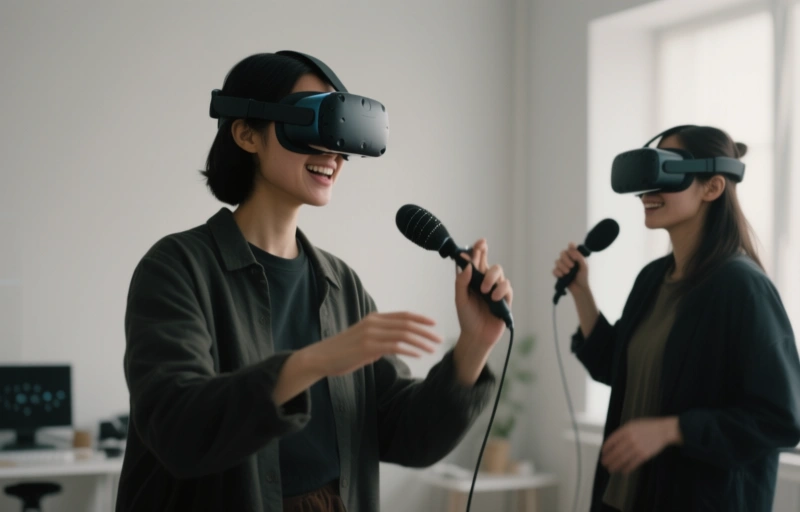
Testing biometric OpSec for VR performers revealed surprising results: pitch shifting barely helps, but rhythm changes and stylized avatars make a real difference. Here's what actually works.
When we started testing biometric OpSec for VR performers, we had a hunch about what would work and what wouldn't. Turns out, we were only half right.
Pitch shifting alone? Barely made a dent in speaker re-identification scores. We ran session after session, and the numbers barely budged. Rhythm changes, on the other hand, made a huge difference. And they were way harder to maintain when you're under pressure.
### What Actually Moves the Needle
Here's what surprised us most: stylized avatar rigs genuinely reduced measurable pose-stream uniqueness in side-by-side tests. But that's just the beginning.
- Pitch shifting alone does almost nothing to protect voice identity
- Rhythm changes matter far more for voice anonymization
- Stylized avatars reduce body-movement uniqueness significantly
- Maintaining altered rhythms under performance pressure is tough
Think of it like this: your voice is like a fingerprint. Changing the pitch is like wearing gloves—it hides the surface but not the shape. Changing your rhythm is like actually altering the bone structure. It's deeper, harder to fake, and harder to keep up.
### The Privacy Paradox for VR Performers
Here's the thing about VR performance: you're using your whole body. Every gesture, every tilt of your head, every subtle shift in weight gets captured. That data is incredibly unique—more unique than most people realize.
We tested several anonymization techniques, and the results were clear. Simple fixes like pitch shifting give a false sense of security. They make you feel safe without actually being safe.
> "The most dangerous privacy tool is the one that makes you feel protected when you're not."
That quote from one of our testers stuck with us. Because it's true. If you think pitch shifting is enough, you might let your guard down everywhere else.
### Practical Steps for Better OpSec
So what actually works? Based on our testing, here's what we recommend for VR performers:
1. Use stylized avatars with exaggerated proportions—they break the body-movement signature
2. Practice rhythm variation in your speech patterns regularly
3. Combine multiple techniques rather than relying on any single one
4. Test your setup under performance conditions, not just in practice
We found that performers who layered techniques—avatar changes, voice rhythm shifts, and movement pattern alterations—had the lowest re-identification rates. No single method was enough on its own.
### The Bottom Line
Biometric OpSec for VR isn't about finding one magic solution. It's about building layers of protection that work together. Pitch shifting is a start, but it's not the finish line.
If you're a VR performer, take a hard look at your current setup. Are you relying on quick fixes? Or are you building real, layered protection? The difference could be your privacy.
We're continuing to test new techniques and will share more results as we get them. For now, focus on rhythm, movement, and stylization. Those are the tools that actually work.